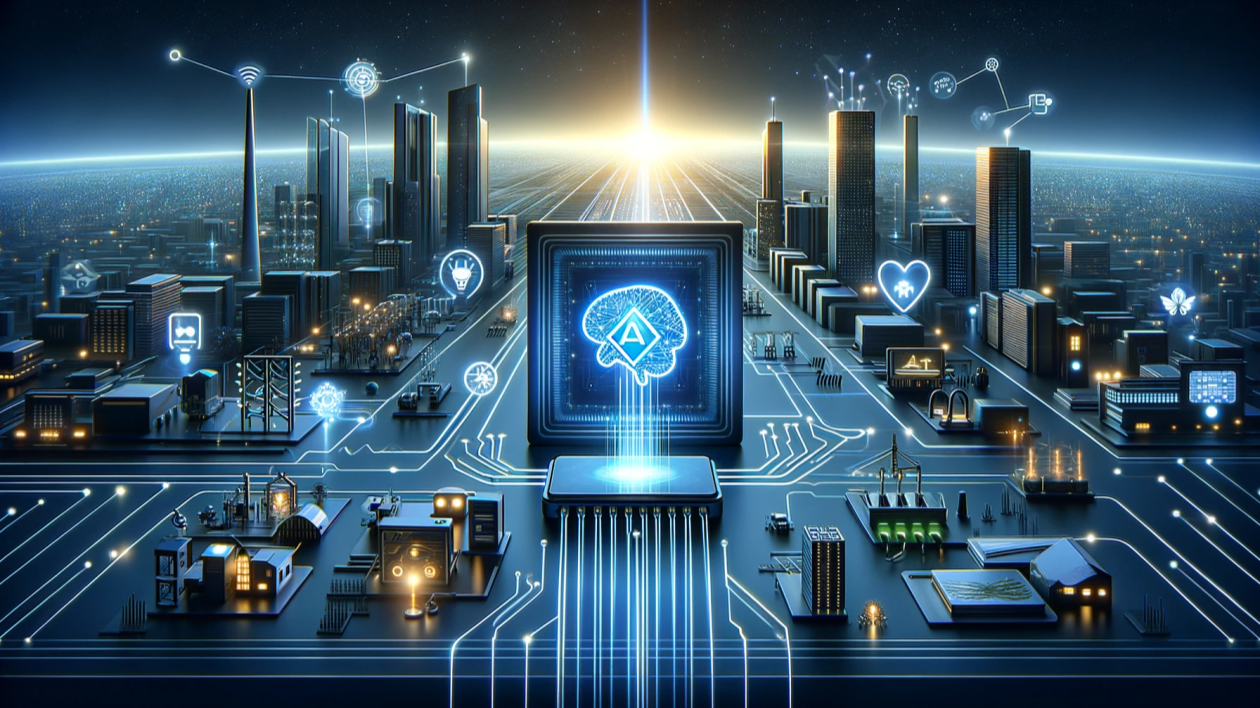
In the past decade, artificial intelligence (AI) has transformed from a futuristic concept into an everyday necessity. From voice assistants and smart cameras to predictive maintenance and real-time analytics, AI powers countless aspects of modern life. However, as our digital world grows increasingly connected, one major shift is redefining the way AI operates: the rise of Edge AI — a new era where intelligence moves closer to the user.
What Is Edge AI?
Edge AI refers to the deployment of artificial intelligence algorithms directly on devices at the “edge” of the network — such as smartphones, IoT sensors, industrial robots, and autonomous vehicles — instead of relying solely on centralized cloud servers.
In this model, data is processed locally, enabling faster decision-making and reducing the need to send massive data streams to the cloud.
This shift represents a key step in the evolution of AI architecture. While cloud computing remains essential for model training and large-scale analytics, edge computing allows for real-time inference, enhanced privacy, and lower latency, all of which are critical for modern digital experiences.
Why Intelligence Is Moving to the Edge
The migration of AI processing from cloud to edge devices is driven by three main factors: speed, security, and scalability.
- Speed (Low Latency)
Cloud-based AI requires sending data to remote servers for analysis, which introduces delay. In contrast, Edge AI performs computations locally, providing near-instant responses — crucial for time-sensitive applications such as autonomous driving or real-time video surveillance. - Security and Privacy
As data protection regulations tighten worldwide, organizations are rethinking how user data is stored and processed. Edge AI reduces privacy risks by keeping sensitive information (like images or biometric data) on the device rather than transmitting it to the cloud. - Scalability and Efficiency
With billions of IoT devices generating data, sending everything to centralized servers is costly and unsustainable. Edge AI minimizes bandwidth usage and reduces dependency on network connectivity, making AI more efficient and resilient.
Real-World Applications of Edge AI
The potential of Edge AI extends across nearly every industry. Here are a few examples reshaping innovation today:
- Autonomous Vehicles: Cars equipped with Edge AI can instantly detect obstacles, pedestrians, or traffic signals — even in areas with poor network coverage.
- Healthcare Wearables: Smartwatches and medical sensors analyze biometric data locally, providing real-time health insights while protecting user privacy.
- Smart Manufacturing: In Industry 4.0 environments, sensors and cameras powered by AI detect equipment anomalies, preventing costly downtime.
- Retail and Smart Cities: Edge-based cameras and sensors enable personalized shopping experiences, crowd management, and energy optimization.
- Agriculture: Drones and smart farming devices use Edge AI to monitor crops, soil health, and weather conditions to increase yield efficiency.
Each of these applications benefits from the same principle: intelligent processing done closer to where the data originates.
Technological Drivers Behind Edge AI
Several breakthroughs are making Edge AI possible at scale:
- Specialized Hardware: Chips like Google’s Edge TPU, NVIDIA Jetson, and Apple’s Neural Engine are designed to handle machine learning tasks directly on devices.
- Optimized AI Models: Techniques like model quantization, pruning, and knowledge distillation allow complex neural networks to run efficiently on smaller processors.
- 5G Connectivity: The rollout of 5G networks enhances the performance of hybrid edge-cloud systems, supporting real-time communication and adaptive data routing.
- Software Ecosystems: Frameworks like TensorFlow Lite, ONNX Runtime, and OpenVINO make deploying AI at the edge simpler and more accessible.
Challenges and Limitations
Despite its promise, Edge AI is not without obstacles. Limited processing power, hardware costs, and energy consumption are ongoing challenges. Moreover, updating AI models across millions of distributed devices raises questions about consistency and security.
To address these, hybrid architectures are emerging — combining the best of both worlds. Data can be processed locally for immediate needs while still leveraging cloud resources for deeper analytics and global coordination.
The Future of AI Is Distributed
Edge AI is more than a technological upgrade; it’s a fundamental reimagining of how intelligence operates. As connected devices become the new frontier of computing, we are entering a world where AI lives everywhere — not just in distant servers, but in our cars, homes, cities, and even bodies.
In the coming years, the convergence of edge computing, 5G, and next-generation AI chips will accelerate this trend. The result will be a smarter, faster, and more private digital ecosystem — one where intelligence truly moves closer to the user.
Final Thoughts
The rise of Edge AI represents a pivotal moment in the digital evolution of society. Businesses that embrace it will unlock new efficiencies, create more personalized experiences, and maintain stronger control over data.
Just as the cloud transformed computing in the 2010s, Edge AI will define the 2020s — bridging the gap between human needs and machine intelligence, right at the edge.